Oral Cancer Screenings: What Happens During the Exam

Most patients walk out of a routine cleaning without realizing their Prattville dentist just checked them for cancer. An oral cancer screening is not a separate, intimidating appointment. It is folded into the same visit as your regular checkup, the one that also catches cavities and gum problems before they turn into something bigger.
Why an Oral Cancer Screening Takes Only a Few Extra Minutes
An oral cancer screening adds very little time to an appointment you are already having. Your dentist is already looking in your mouth for decay and gum health as part of standard preventative care, so checking the soft tissue for anything unusual happens in the same breath, often without the patient noticing it as a separate step at all.
That small amount of time matters more than it seems. The National Institute of Dental and Craniofacial Research reports that oral cancer caught at a localized stage has an 86.3% five-year survival rate, compared with just 40.4% once it has spread to distant parts of the body.
The difference between those two numbers is often nothing more than how early someone was screened, which is exactly why dentists build the exam into routine care instead of waiting for a patient to ask for it.
Who Actually Needs a Screening
Every adult benefits from a screening, not just people who smoke or drink heavily, though those habits do raise the risk considerably.
The Centers for Disease Control and Prevention reported over 45,000 new cases of oral cavity and pharynx cancer in a single recent year, and a meaningful share of those patients had no major risk factors at all.
A good dentist does not reserve the exam for a specific age group or lifestyle. It takes the same couple of minutes whether you are twenty-five or sixty-five, and it catches changes long before they would ever cause pain or become noticeable on their own.
The Visual Part of the Exam
Your dentist starts by looking, not touching. This part of the screening covers the areas where early changes tend to show up first:
- The lips, both the outer surface and the inner lining.
- The inside of the cheeks and the gums around every tooth.
- The roof of the mouth and the floor underneath the tongue.
- The top, sides, and underside of the tongue itself.
- The back of the throat and visible tonsil tissue.
Your dentist is looking for anything out of the ordinary: red or white patches, sores that have not healed, or rough or thickened patches of tissue. Most of what gets spotted here turns out to be harmless, but catching the rare exception early is the entire point of the exam.
The Physical Part of the Exam
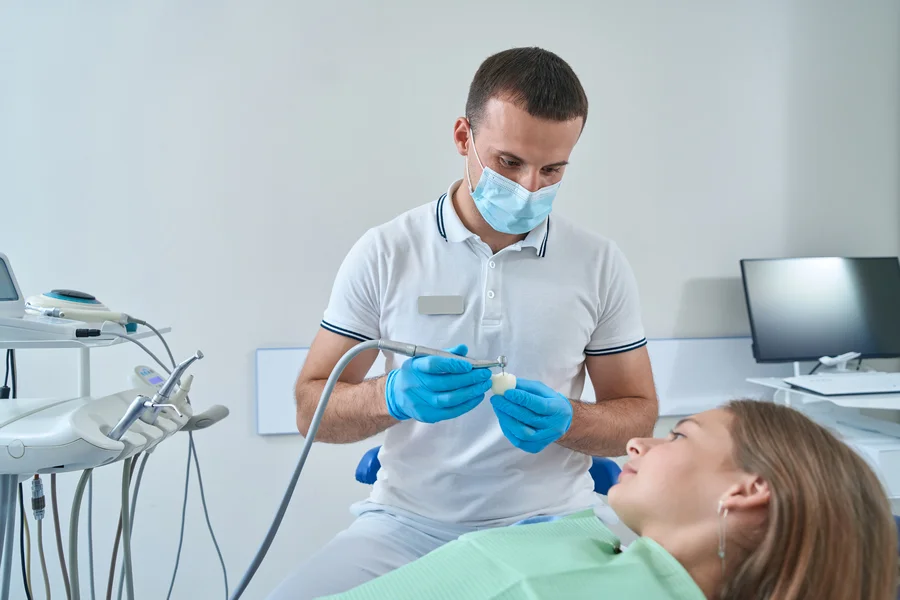
After the visual check, your dentist moves to touch. Using gloved fingers, they gently feel along the jaw, under the chin, and down the sides of the neck, checking the lymph nodes for lumps, swelling, or areas that feel firmer than the surrounding tissue.
Inside the mouth, they may also press lightly on the cheeks, floor of the mouth, and the base of the tongue. None of this should cause pain, and most patients barely notice this part happening at all.
A Closer Look With the Right Tools
Some changes are easy to see under normal light, but others are not. That is where a practice's advanced technology comes in. A specialized light can highlight tissue changes that would otherwise blend in with the surrounding area, giving your dentist a clearer picture before deciding whether anything needs a closer look.
This extra step does not replace the visual and physical exam described above. It simply adds another layer of detection on top of what trained eyes and hands can already catch, which matters most for the kinds of early-stage changes that are hardest to spot with the naked eye.
What Happens If Something Looks Off
Finding something unusual during a screening does not mean a cancer diagnosis. Most red or white patches are caused by minor irritation, a bite, or a canker sore that is simply taking longer than usual to heal.
If a spot does not resolve within a couple of weeks, or if your dentist sees something they want a second opinion on, the next step is usually a referral for a biopsy. That is a precaution, not a verdict, and it is the same cautious approach any careful dentist takes with every patient who comes through the door.
Between visits, keeping up with daily oral hygiene also makes it easier to notice when something in your mouth looks or feels different from usual.
Questions Patients Often Ask
How often should I get screened?
Once a year is the standard recommendation for most adults during a regular checkup, though people with higher risk factors, such as tobacco or heavy alcohol use, may benefit from more frequent screenings.
Does the screening require any special preparation?
No. There is nothing to do beforehand. It happens during the exam portion of a checkup you were already scheduled for, at the same chair and appointment time.
Is the exam covered by dental insurance?
Most dental plans cover an oral cancer screening as part of a routine checkup, since it falls under standard preventive care rather than a separate procedure. Checking your specific plan is still worth doing if you are unsure.
Can I check for warning signs myself between visits?
Yes. A simple self-check once a month, looking and feeling for new lumps, sores, or patches, can help you notice a change sooner. It is not a replacement for a professional exam, but it adds another layer of awareness between visits, and our team is happy to answer questions about what to look for at your next checkup.

Your Prattville Dentist for Oral Cancer Screenings and More
An oral cancer screening is a small part of a checkup that makes a real difference, and it is one more reason not to put off your next appointment.
Glynwood Park Dental Care builds this exam into every routine visit alongside preventative care like cleanings and gum evaluations, so catching a problem early never depends on remembering to ask for it.
If you are overdue for a visit with your Prattville dentist, reach out to schedule a checkup that covers your whole mouth, not just your teeth.