
Dental Bridges
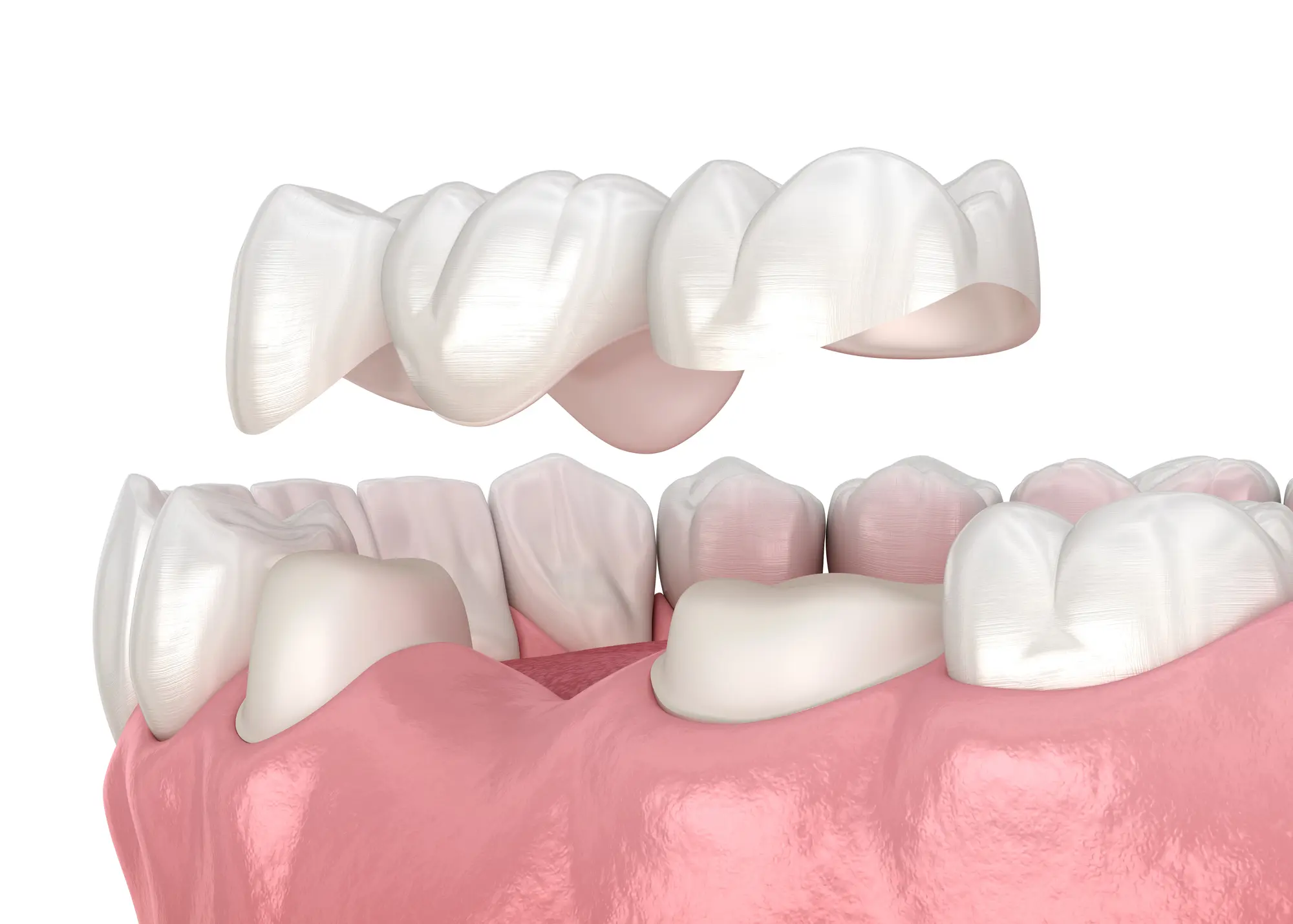
Every missing tooth leaves more than just a gap; it can change the way your bite feels, make certain foods harder to enjoy, and affect the way you speak. A dental bridge fills that space securely, helping your smile look complete again while keeping your teeth and bite working as they should.

What Are Dental Bridges?
A dental bridge is a custom-made appliance that replaces one or more missing teeth by “bridging” the gap. It uses neighboring teeth for support and holds an artificial tooth, called a pontic, in place.
There are two main types of dental bridges:
- Fixed bridges: Permanently cemented in place, fixed bridges offer a stable and long-lasting solution. They are supported by crowns or bonded directly to the supporting teeth.
- Removable bridges: Attached with clasps or precision devices, they allow you to take them out for cleaning.
Fixed bridges tend to feel more natural and secure, while removable ones provide flexibility.
How Are Dental Bridges Made and Placed?
Placing a dental bridge usually takes two or three appointments. First, the teeth next to the gap are carefully reshaped to support the bridge. Impressions are then taken and sent to a dental lab, where your bridge is crafted from durable materials such as porcelain, alloys, or a combination of both.
While the bridge is being made, you may wear a temporary one. Once ready, your custom bridge is adjusted to fit and, if permanent, cemented into place to blend with your natural smile.
When Are Dental Bridges Necessary?
Bridges are recommended when you’ve lost one or more teeth and want to restore normal chewing and speaking ability. They also help maintain your facial shape by preventing the “sunken” look that can occur when teeth are missing.
Without replacement, nearby teeth can drift out of place, leading to bite problems, gum issues, and even speech difficulties.
Are Dental Bridges Permanent?
Dental bridges are designed to be long-lasting. With proper care, most fixed bridges last between 5 to 15 years, sometimes longer.
To keep your bridge in great shape:
- Brush twice a day with fluoride toothpaste
- Floss carefully around the bridge using floss threaders or interdental brushes
- Schedule regular dental cleanings and checkups
- Avoid chewing on very hard foods like ice or nutshells

Say Goodbye to Gaps with Dental Bridges
Discover how a custom dental bridge can restore balance to your smile. Contact Glynwood Park Dental Care today to book an appointment and get started!
.png)
.webp)